
Osnabruck is an attractive, medieval, walled town, with winding streets and interesting architecture, but we did not get to see too too much of it as we arrived late, ate where we slept in the dramatically entitled “Romantik Valhalla Hotel”, where the service was excellent and the clientele were elderly, rather like us, and from where we departed shortly after breakfast. At dinner, The General and I had independently decided to wear the commemorative t-shirts we had purchased in Osnabruck, with the 75 year commemorative insignia, which seemed to attract one or two disapproving looks as we sat at the bar, but, hey, wasn’t Germany also liberated from the Nazis by The Allies?

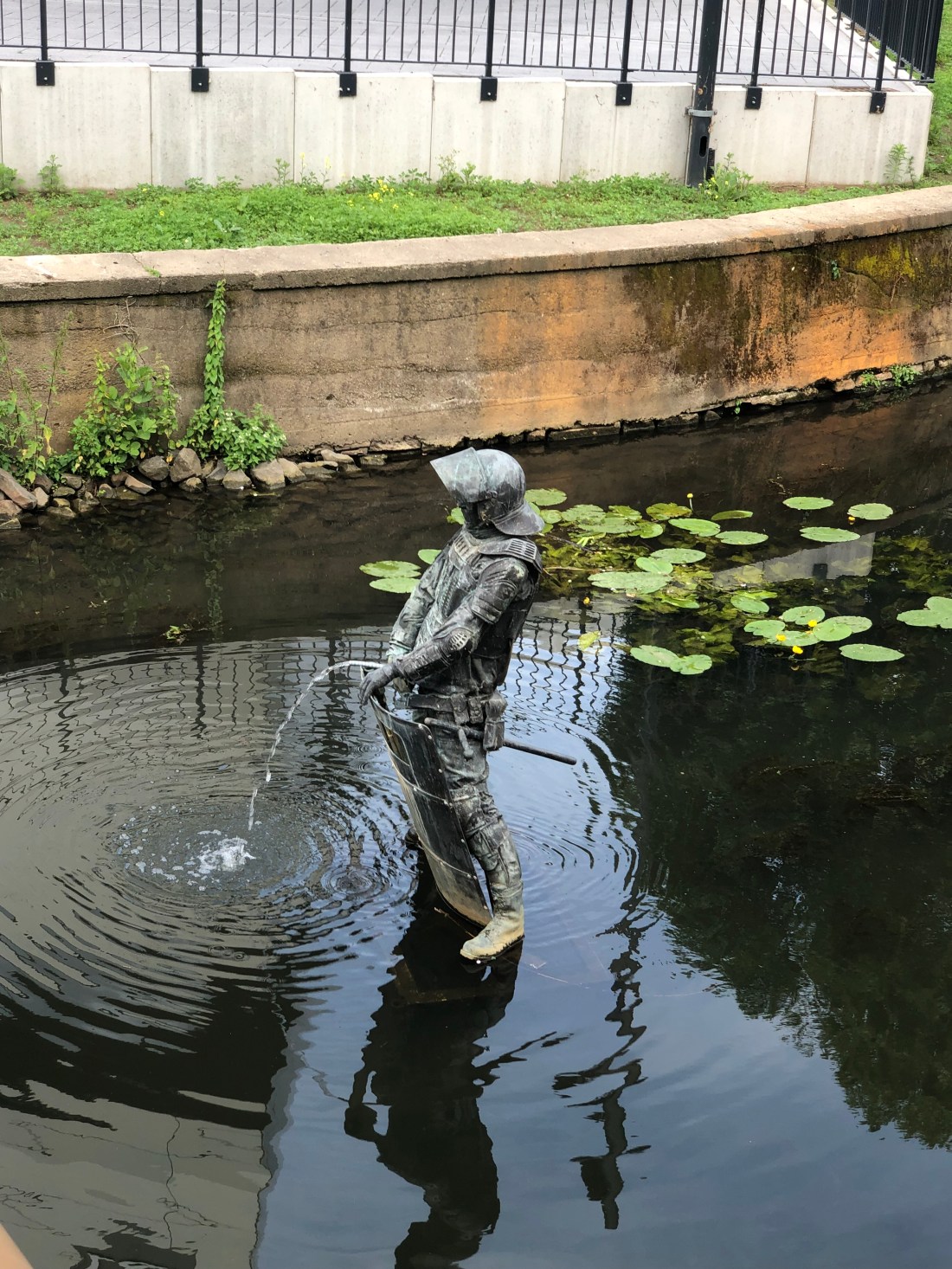

Two moderate climbs out of Osnabruck in the first 8 miles were the worst of the day. Pausing at the top, a passing German cyclist stopped to ask if there was a problem. After being reassured there was not, and after he commented on the many steeper and higher hills there were elsewhere in Germany, he asked me pass on his greetings to the Queen, and headed off down the hill I had just climbed.
The planned route then led down a busy dual carriageway bypass, with no cycle lane. After a quick check of the alternatives on GoogleMaps this was taken at full speed – primarily to get it over with. A few motor vehicles honked their disapproval at this invasion of their road space, and all the way down, I prayed for it to be over, but it was Sunday, there was very little traffic, and eventually safer territory was reached at the bottom, although not without the after effect of trembling legs for a while longer.
The weather was beautiful and the flat countryside and villages of Lower Saxony flew by pleasurably towards the crossing of the Weser at Nienburg.
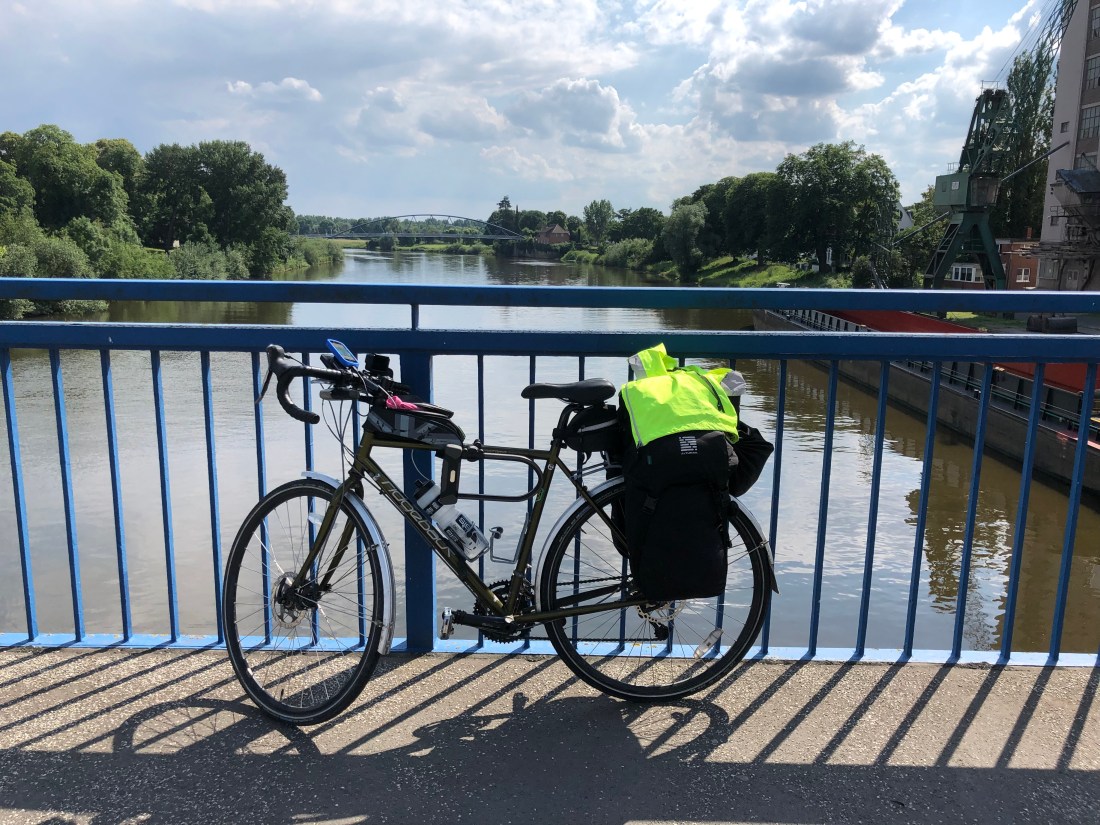
We then ambled on to our stopover at Steimbke – chosen at short notice in order to break the original plan to ride 100+ miles to Bergen.
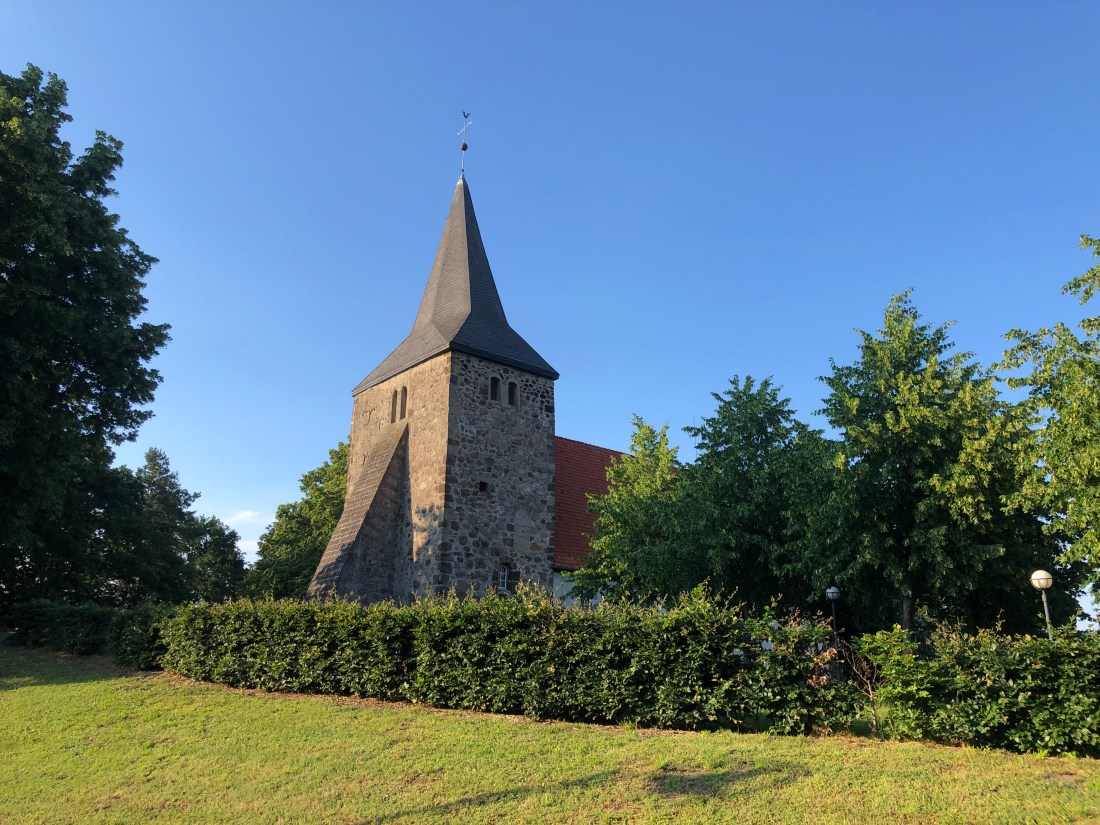
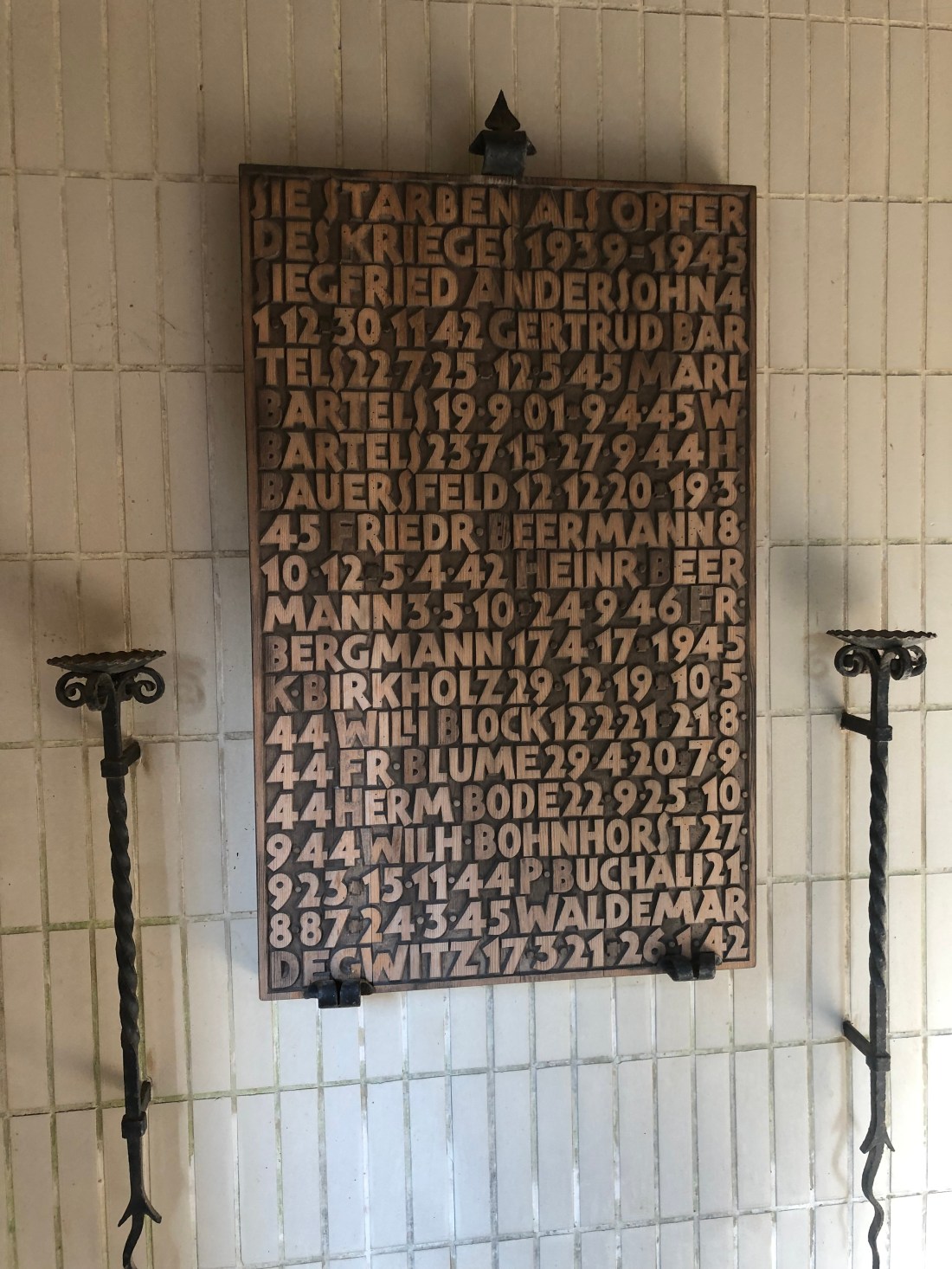
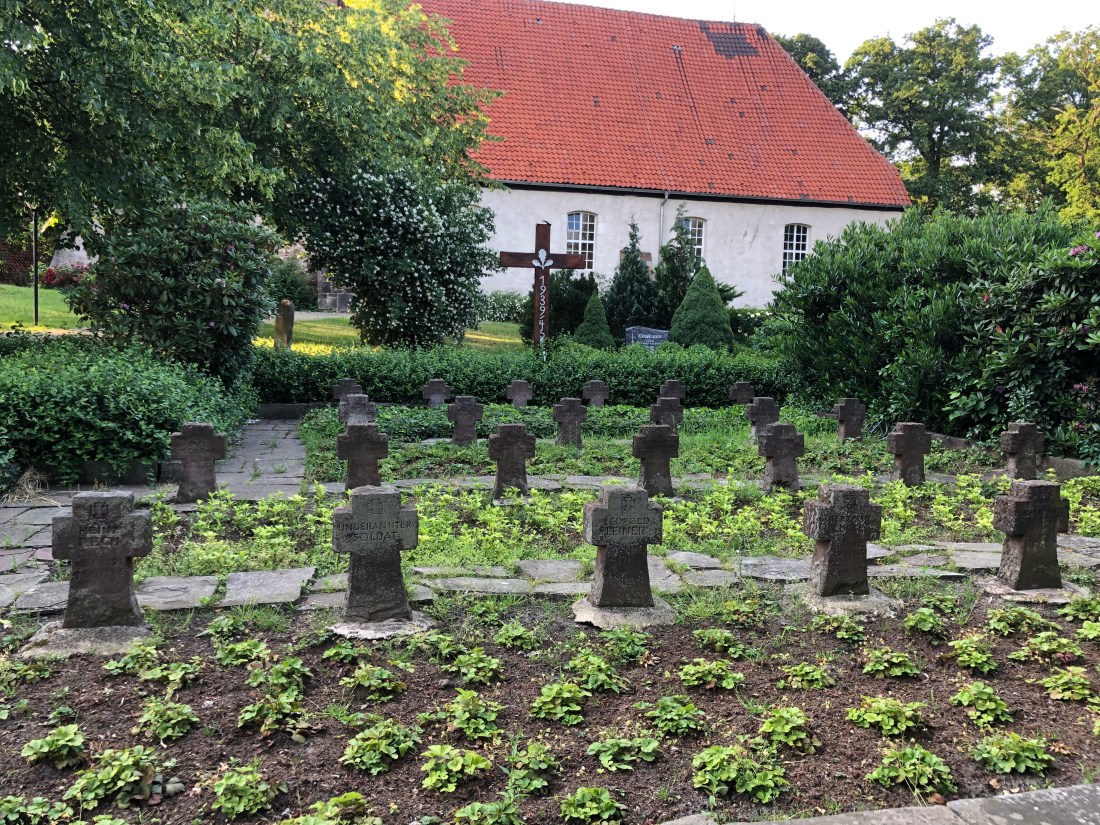
We arrived at the hotel to find a party in full swing and a hostess who seemed surprised at our arrival. I offered to show her the booking confirmation on my phone, and she said she did not understand Booking.com and needed to speak with her husband. I asked to see the manager, who was her husband, and who was busy attending to the party, and she disappeared. As I was starting to look for alternatives in the area, she emerged with two key and we were shown where to park our bikes, before being directed to our rather basic, but comfortable enough, rooms on the first floor. The party was an annual festival in these parts, the “Schützenfest”, which explained the marching band dressed in green jackets a few miles back in Borstel. Our hotelier explained that the festival involved a shooting competition, in which the winner becomes the Schützenkönig (“king of marksmen”) until the next year, followed by much eating of sausage and quaffing of beer. The small crowds of swaying and chanting German youths leaving the party at dusk made for a slightly unsettling air as we sat down for supper at a burger restaurant around the corner. Our feeling of unease was increased when we read that Steimbke was the site of a fierce battle between young SS recruits and British forces in April 1945, and when we wandered up to the local church, the gateway to which was dominated by memorial plaques to the German dead between 1939-45, and the grounds contained a sizeable, rather eerie, German war cemetery. The short, grey stone crosses, and the weeds on the graves, were quite a contrast to the well-tended Allied cemeteries we have visited on this trip. As The General was wearing his Army Medical Corps military insignia on his cap and T-Shirt, we decided to head back to the hotel and have an early night.
Today, after a pleasant breakfast, I decided to examine and tune up the bikes. The back wheel of The General’s bike had developed a marked buckle and the poor chap had been grinding it against both of the brake pads every revolution for God knows how many miles. No wonder his thighs had been aching. The only thing for it was to loosen the back brakes. He certainly found it smoother going today.
Once fettled, we were on our way. We continued on the road East with the intention of stopping to visit the site of the Bergen-Belsen Memorial. The barometer has been rising for the past couple of days, and the temperatures today have been in the high-20s – low30s. However, the paths have been well-shaded by trees, and the going has been good. Along one long stretch of the 214 towards Winsen, we passed a motor-home parked off in a side road to our right. It was occupied by a young woman sat alone in the passenger seat, smoking a cigarette. The General, who is more observant of these matters than I, noticed that she was rather scantily clad. Further along, we passed another three such vehicles similarly occupied. Without wishing to be prejudicial, none of these heavily made-up ladies looked like typical campers. The conclusion that we were riding through a small, rural, German red-light district was hard to avoid.
After about 30 miles we arrived at the site of the Bergen-Belsen concentration camp.
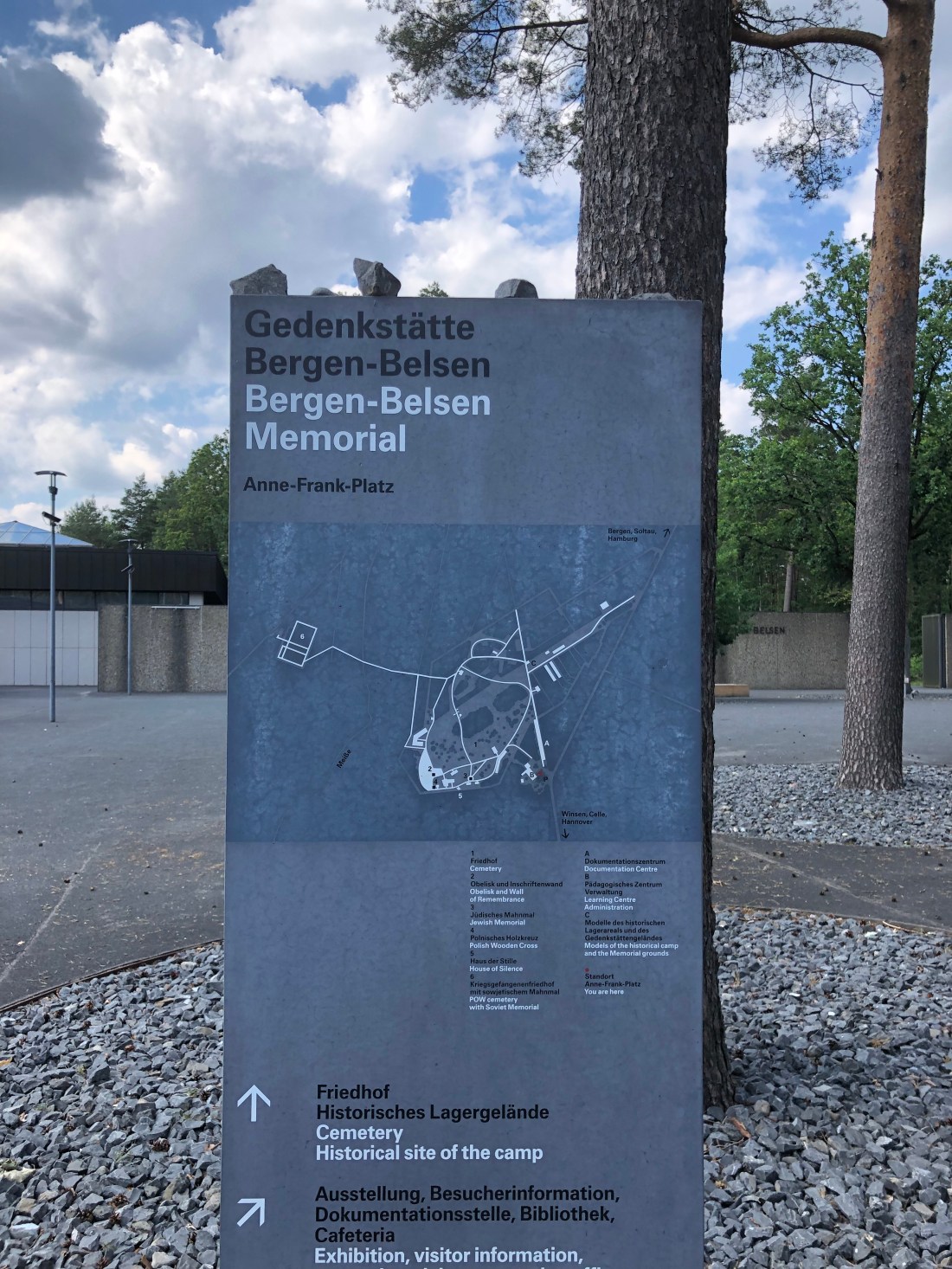
Here, I am afraid that I really do run out of words. I could try to write something about “Man’s inhumanity to Man”, or how the site and the exhibition helps one to understand the true horror of Nazi Germany, but there is nothing I can honestly say that will convey any understanding of what I have seen today. One is just left feeling stunned and overwhelmed at the sheer scale of the place, and of suffering inflicted on the people held there by other people. I urge you to see it for yourselves, because I can’t describe it.
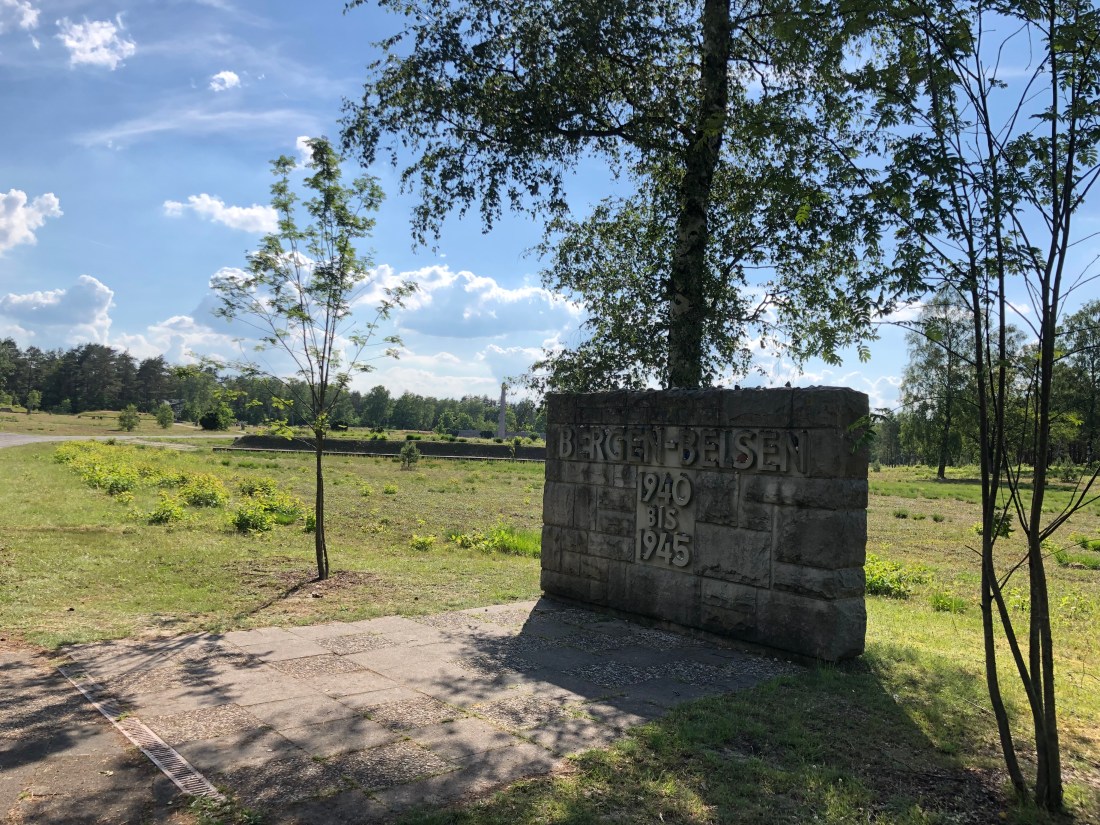

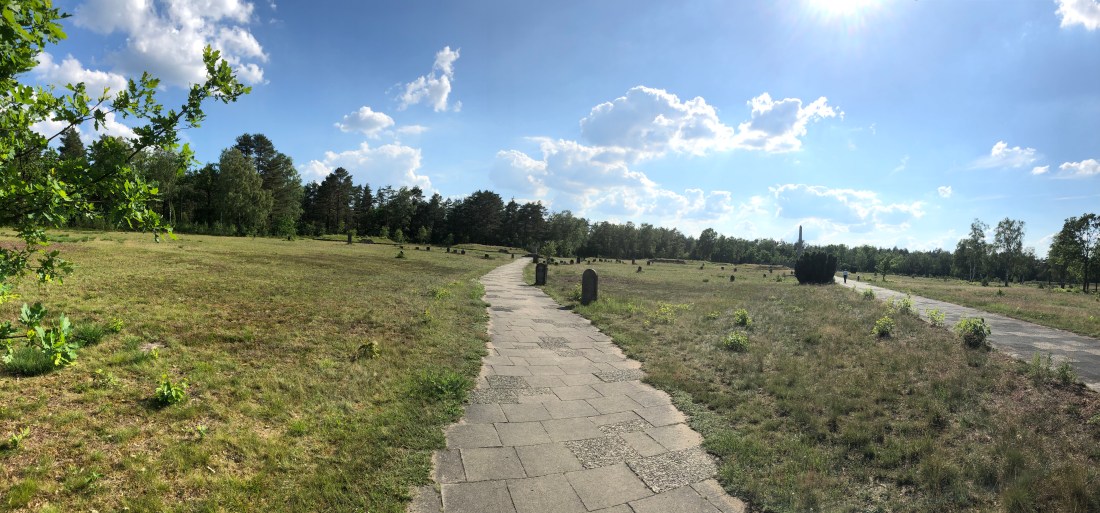
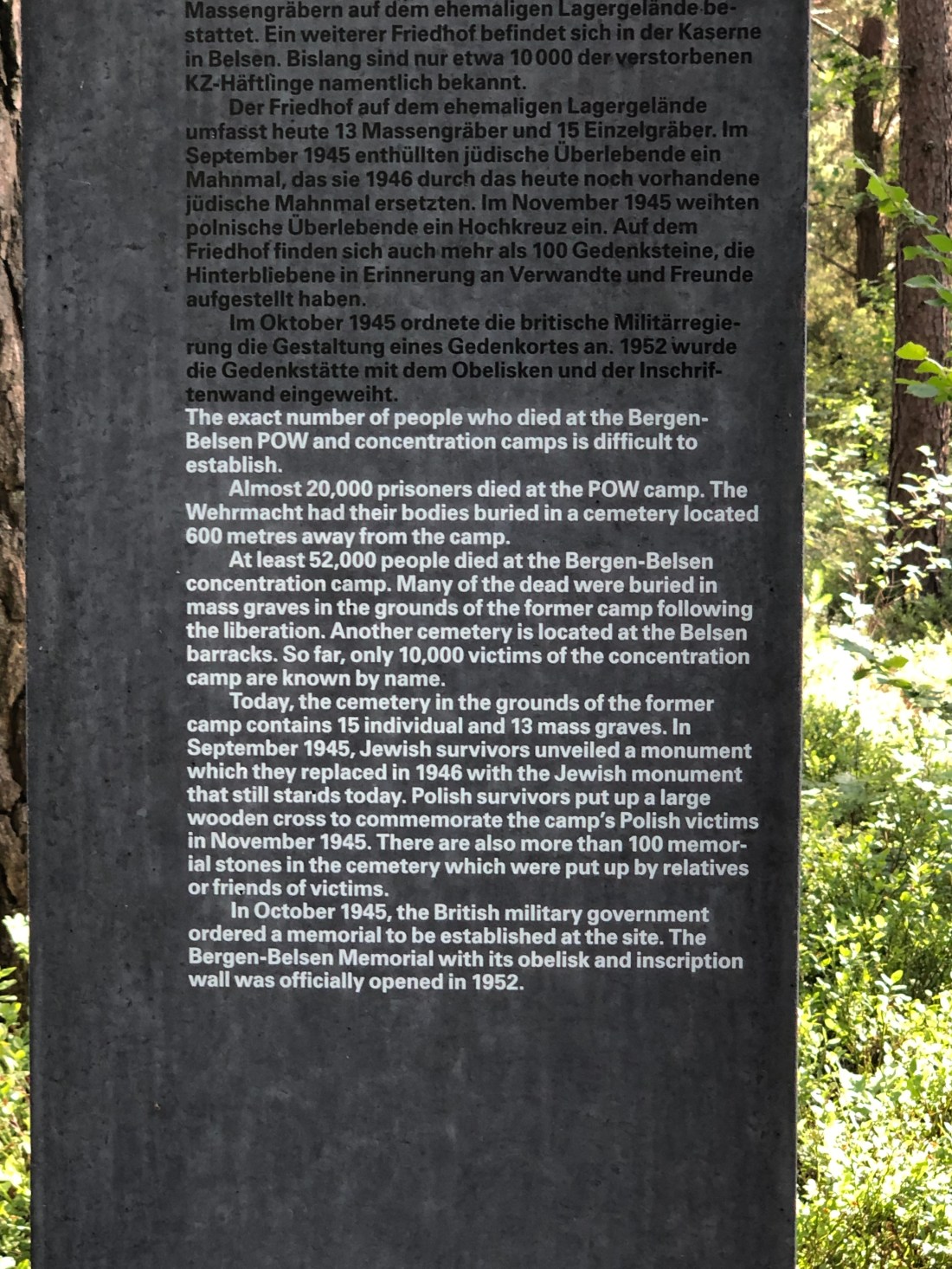
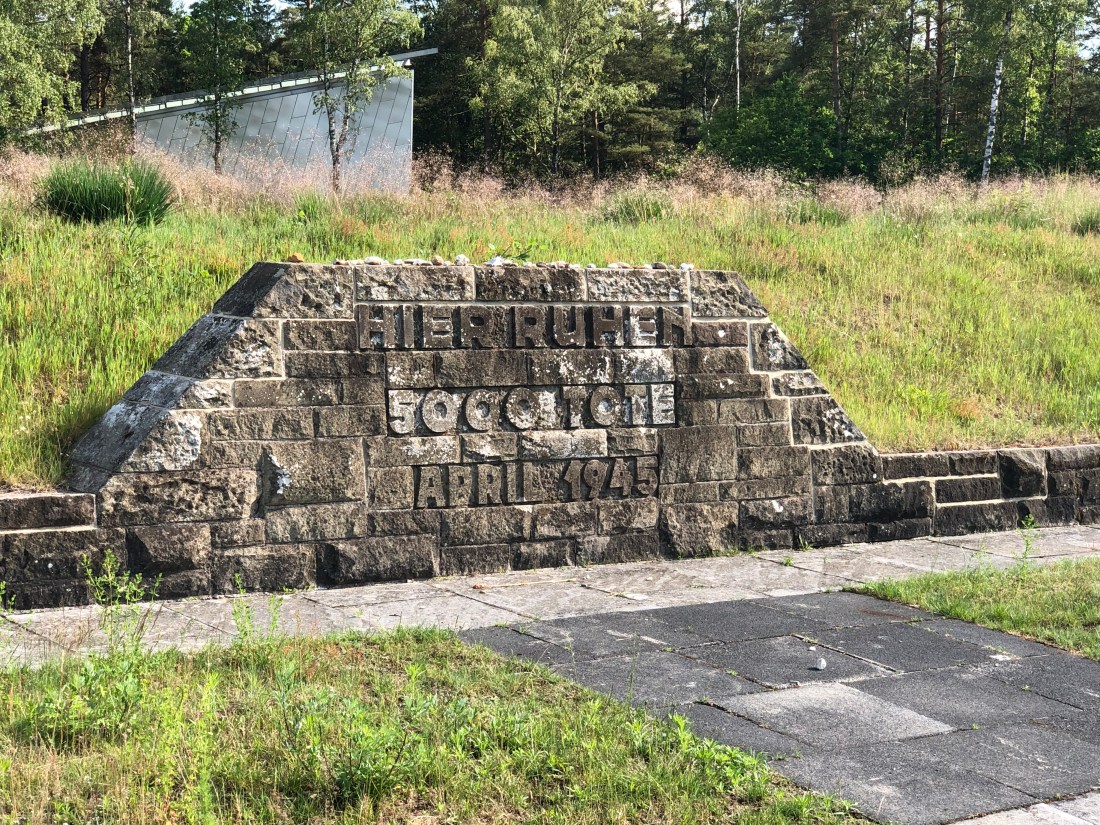


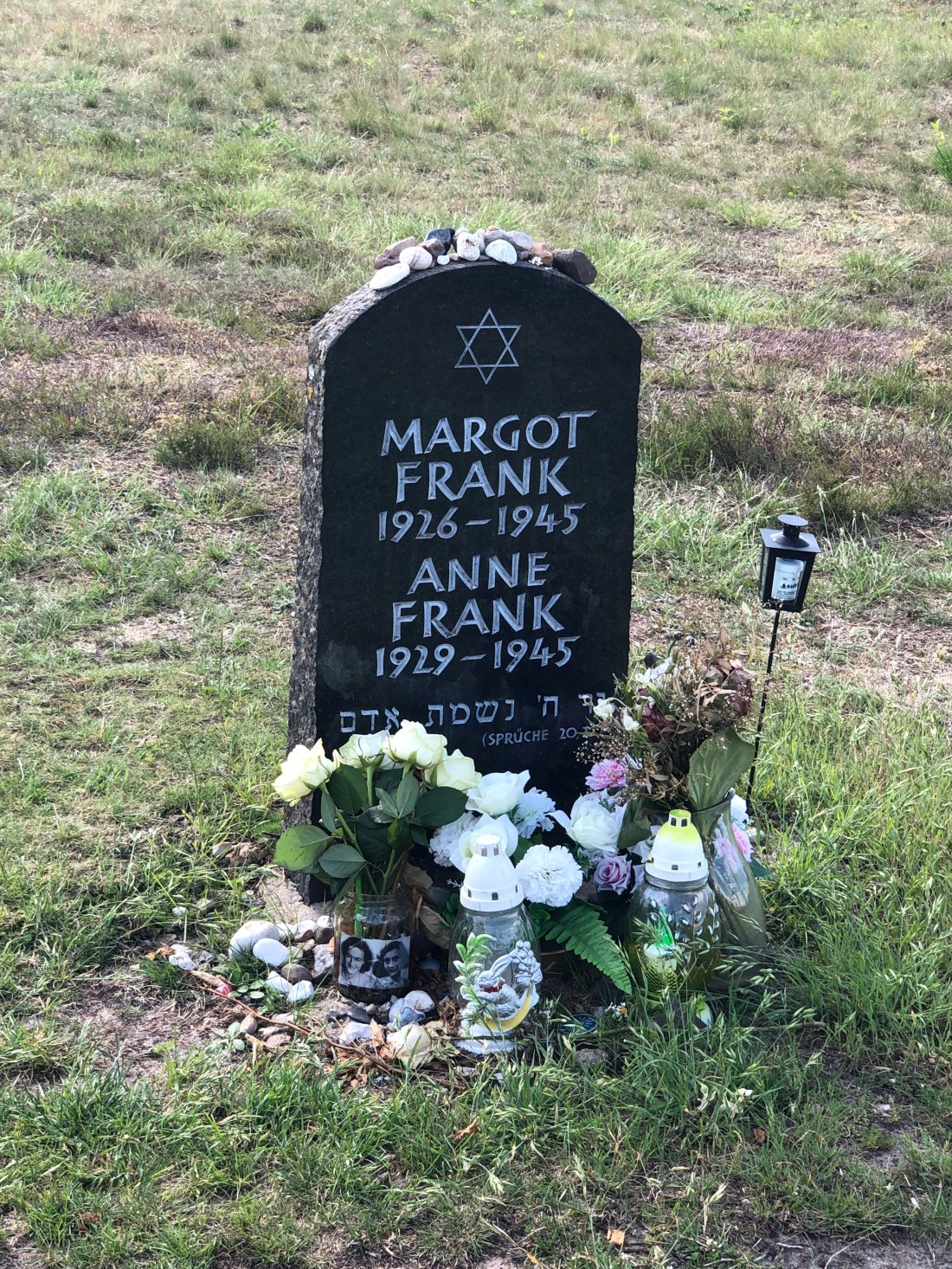
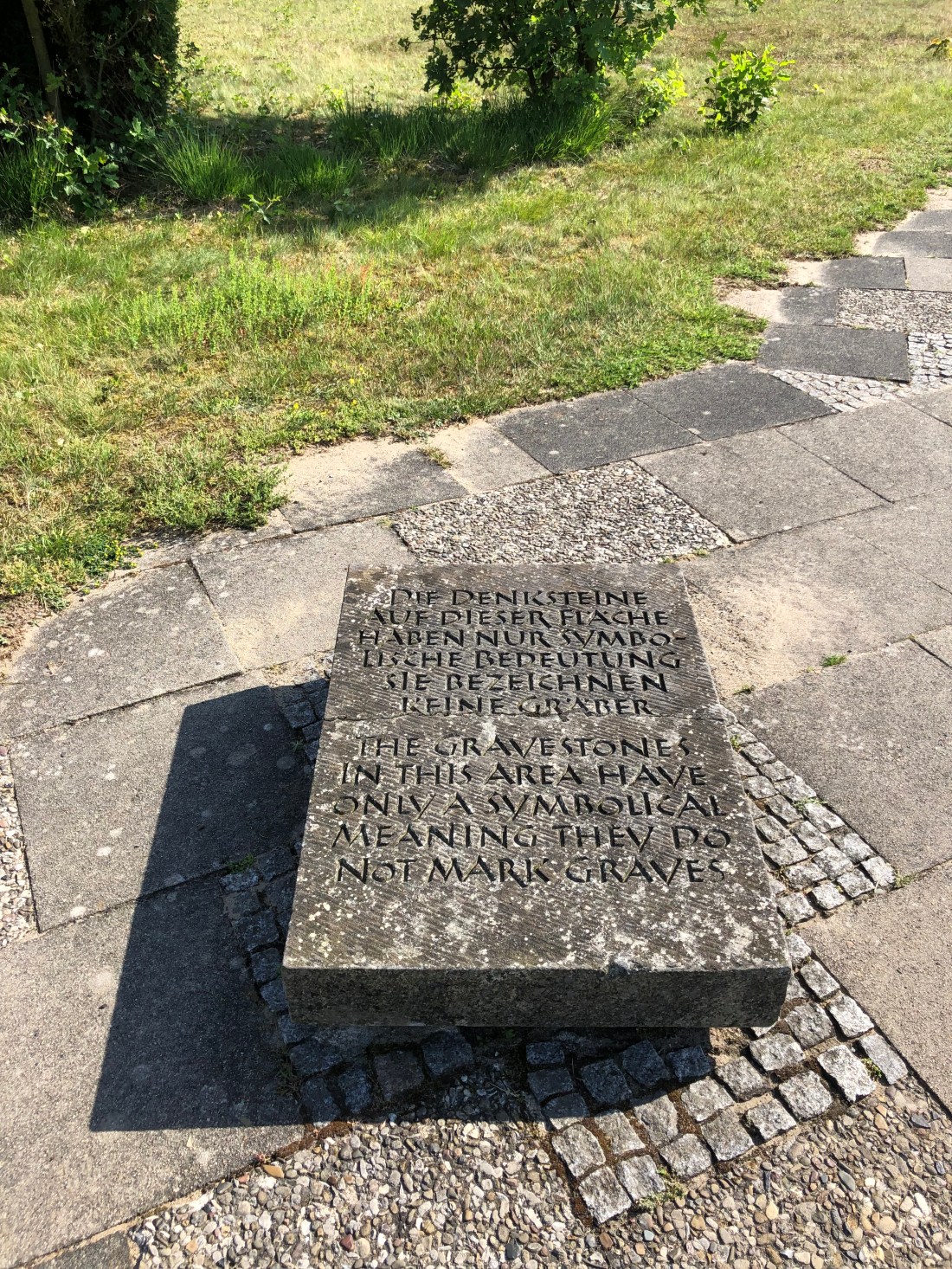
The raised areas are massed graves, each containing thousands of unidentifiable bodies, who had been left to rot on the open ground for weeks and months before the British XI Armoured Division liberated the camp. The individual gravestones are symbolic.
 The Trick Cyclist